

World Youth Skills Day (WYSD) 2025 – “Youth Empowerment through AI and Digital Skills”
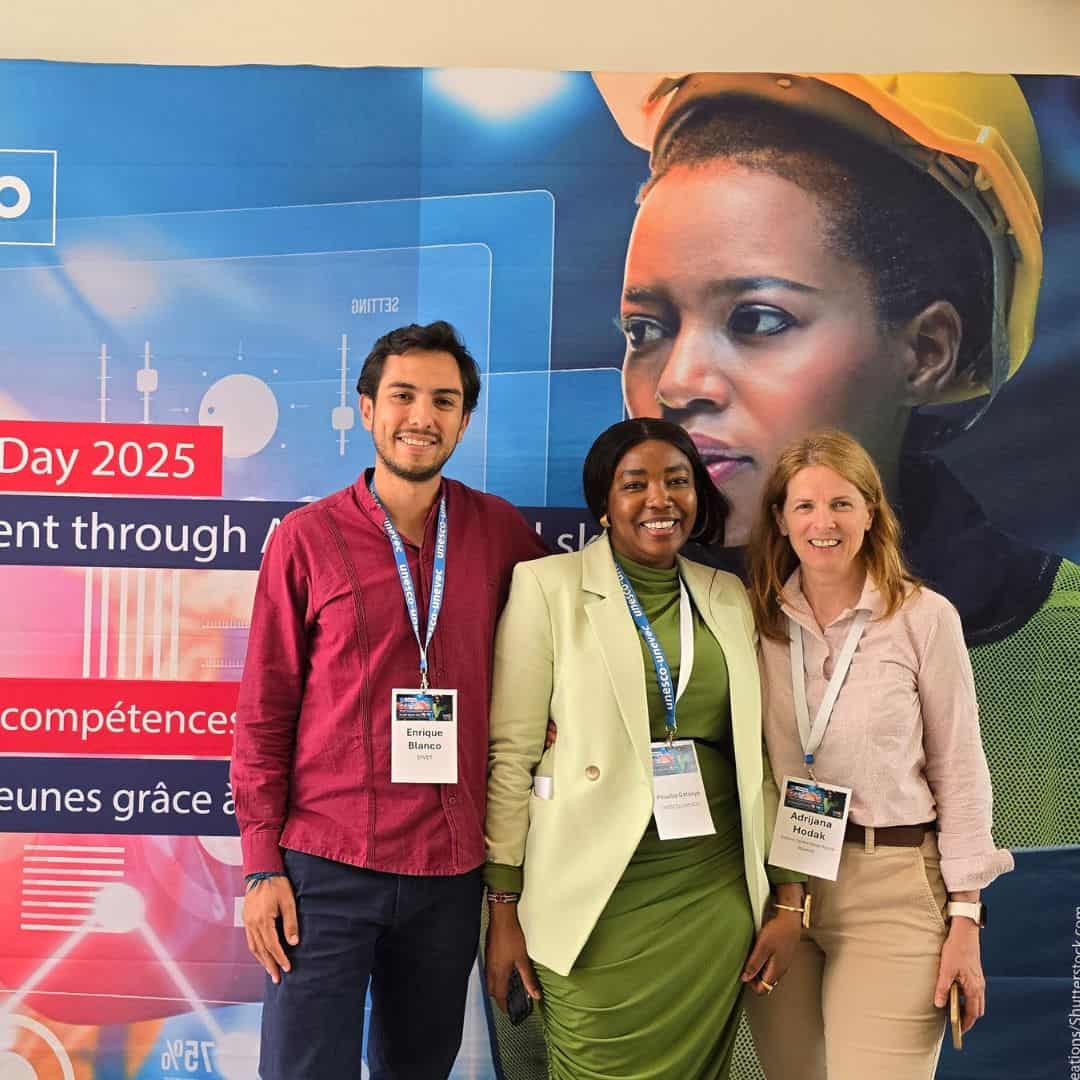
Yesterday, EfVET participated in the WYSD event at the Learning Planet Institute in Paris, France. The UNESCO event featured high-level panel discussions with UN officials, policymakers, educators, and youth leaders.
To kick off the event, young leader Shweta Ratanpura shared a key message from Mr. António Guterres, Secretary-General of the United Nations: “As AI reshapes our world, young people must be seen not just as learners – but as co-creators of a fairer digital future.”
The keynote speeches included messages from H.E. Manisha Gunasekera, Ambassador of Sri Lanka to France and Permanent Delegate to UNESCO, and Ms. Stefania Giannini, Assistant Director-General for Education, UNESCO.
H.E Manisha Gunasekera voiced a call for collective international action for:
- Addressing the digital divide by advancing universal broadband, open data platforms, and affordable devices to ensure that youth in developing countries join the digital economy.
- Future-ready education systems by integrating AI literacy, cybersecurity, and digital ethics while fostering creativity and lifelong learning.
- Recognizing youth as co-creators and leaders of digital AI, empowering them as active stakeholders to ensure AI benefits human development.
Ms. Stefania Giannini insisted on AI empowerment and its ethical considerations, such as:
- Moving from AI awareness to empowerment, preparing education systems to help students leverage AI.
- Balancing the opportunities and risks of AI, emphasizing ethical dimensions and inclusivity in its development.
The first panel session, “AI in TVET: A tool for empowerment or a threat to human potential,” showcased inputs from young people:
- Youth panelists shared their favourite AI tool for content creation, support in writing, and cross-referencing information for research purposes.
- Recommendations to use AI as an assistant, helping shape your story better while preserving your ideas and creative thinking.
- Concerns about surveillance, accessibility, and misuse of AI within educational and societal contexts were raised.
- Final messages included “Feed AI for good, using it with conscious and purpose” | “Dont let AI think for you but with you”.
The second panel “Policy and Practice: Skills Demand, Trends, and Institutional Readiness Speakers” highlighted the following aspects:
Policy
- Missing to include AI elements in the policy-making process of education and training
- Updating qualifications and training systems regularly to reflect emerging skill demands, especially in AI, digital, and green skills.
- Developing systemic strategies that encompass governance, teacher training, infrastructure, and certification frameworks to cope with technological change.
Labour market dynamics
- Importance of digital and AI skills in global standards through occupational standards and collaboration with industry.
- Update competition standards to reflect current industry technologies, including AI, cybersecurity, and cloud computing, and supports participation through mentorship and skills exchange programs.
- Labour markets are facing talent shortages and recruitment challenges in AI-related sectors.
Equity & Inclusion
- Underserved groups, especially in low-income and rural regions, may have limited access to digital upskilling opportunities.
- UNESCO and WorldSkills initiatives promote inclusive skill development through mobile and satellite learning platforms, mentorship, and qualification recognition tools like the UNESCO Skills Passport.
- Strengthening community engagement, youth empowerment, and peer support networks to democratize access to AI education.
Furthermore, the event showcased the Global Skills Academy and its impact
- The academy addresses the need for digital and green skills, reaching 28+ million learners across 140+ countries
- The global education coalition includes 25+ partners and 200+ TVET providers across the world.
- There are 15+ skills covered across digital, green, and entrepreneurial topics.
The final part of the event featured 3 break-out sessions:
- Co-Creation and Innovation: AI-ready TVET systems
- Applying AI in the Classroom and Workplace
- Youth-Led Innovation Ecosystems – Co-creating and Leading Skills Solutions
Closing remarks were shared by Borhene Chakroun, Director for Policies and Lifelong learning UNESCO and Francois Tadei, Co-Founder & Director, Learning Planet Institute. They conveyed a key message insisting on accessibility, multistakeholder agency, and collaboration. It is time to engage with the younger generations to co-create education and training models that are sustainable, future-proof, and inclusive.
Learn more: https://unevoc.unesco.org/wysd/
UNESCO’s Global Skills Academy: https://www.unesco.org/en/global-education-coalition/skills-academy?hub=68184
Draft AI Literacy Framework: https://ailiteracyframework.org/